


My Child Doesn’t Want to Go to Daycare Anymore: What Should I Do?
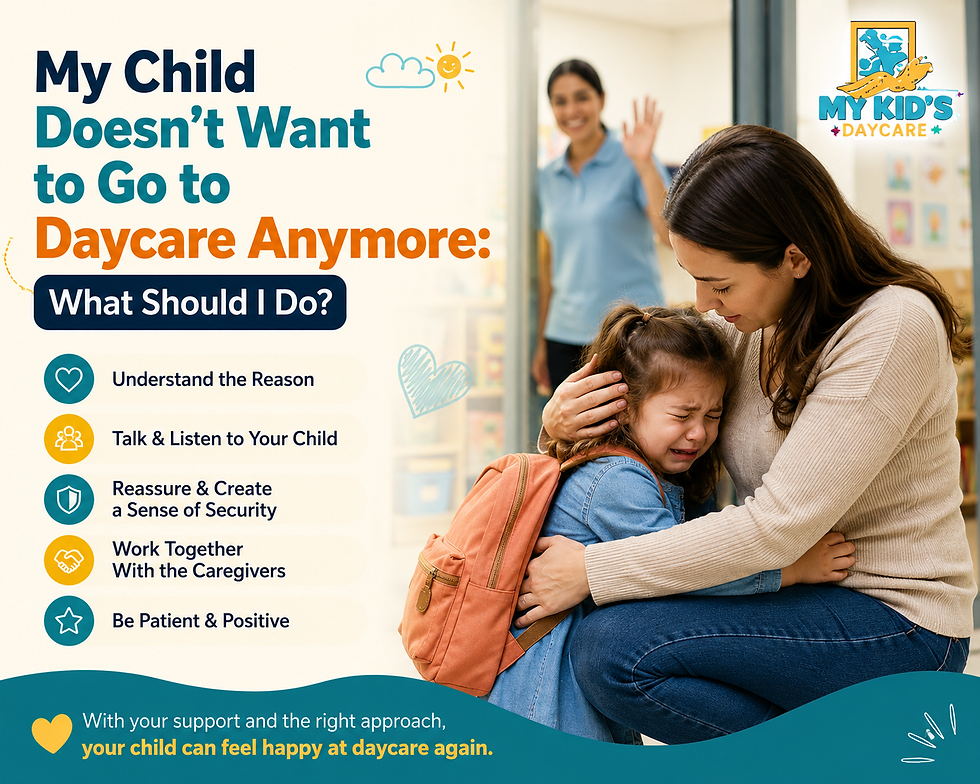
It can be upsetting when your child suddenly says, “I don’t want to go to daycare anymore.” Even if they once enjoyed going, changes in behavior can leave parents wondering what happened. Is your child simply going through a normal phase, or is there a deeper reason behind the change?
The good news is that daycare resistance is common, especially during periods of transition. Children may struggle with separation, tiredness, changes in routine, new classroom experiences, or difficulty expressing their feelings.
Understanding the reason behind the behavior can help parents respond with patience and confidence.
Why Does My Child Suddenly Not Want to Go to Daycare?
Children do not always have the words to explain what is bothering them. Instead, they may show their feelings by crying, refusing to get dressed, becoming quiet, or having a difficult drop-off.
Some common reasons include:
Separation Anxiety
Even children who have been comfortable at daycare can experience separation anxiety. Changes at home, a new classroom, developmental changes, or simply becoming more aware of separation can cause a child to become more attached to their parents.
Your child may say they want to stay home because leaving you feels difficult. This does not necessarily mean they are unhappy throughout the day.
Changes in Routine
Young children often feel more secure when they know what to expect. A change in teachers, classrooms, schedules, nap times, or activities can temporarily make daycare feel unfamiliar.
Try explaining changes ahead of time using simple language. Let your child know what will happen and remind them that their daily routine will continue.
Feeling Tired or Overstimulated
A long day of learning, playing, socializing, and following routines can be tiring for young children. If your child is consistently exhausted at pickup or has difficulty sleeping at night, they may begin associating daycare with feeling tired.
A consistent bedtime and relaxing evening routine can help your child get the rest they need.
Difficulty With Friends
Social relationships become increasingly important during the preschool years. Your child may be experiencing difficulty sharing, taking turns, joining a group, or communicating with another child.
Children sometimes describe these experiences simply by saying, “I don't like daycare.”
Ask gentle questions such as, “Who did you play with today?” or “What was your favorite part of your day?” Avoid pressuring your child to provide an immediate explanation.
A Challenging Day
Sometimes, the reason is simple: your child had a bad day.
They may have struggled with an activity, gotten frustrated during play, missed a favorite toy, or had a disagreement with a friend. One difficult experience does not automatically mean daycare is a poor fit.
Give your child an opportunity to talk while reassuring them that difficult days happen.
How Parents Can Help
The way parents respond can make a major difference. Instead of immediately saying, “You have to go,” acknowledge your child's feelings first.
You might say, “I know you don't feel like going today. It can be hard to say goodbye, but I know you can handle it.”
This approach lets your child know that their feelings are valid while still maintaining the expectation that daycare is part of their routine.
Keep Drop-Off Calm and Consistent
Long, emotional goodbyes can sometimes make separation harder. Create a simple drop-off routine that your child can recognize every morning.
For example, you might:
Give a hug.
Say what time you will return.
Use the same goodbye phrase.
Smile and leave confidently.
A predictable routine can help children understand that goodbye is temporary.
Talk About the Positive Parts of the Day
Instead of repeatedly asking, “Did you have fun today?” try asking specific questions.
“What did you build today?”
“Did you sing any songs?”
“What did you play outside?”
“Which story did your teacher read?”
Specific questions can encourage children to remember positive experiences and give parents a better understanding of their day.
Let Your Child Bring Comfort From Home
Depending on the daycare's policies, a small familiar item can help your child feel connected to home. A family photo, small comfort object, or another approved item may make transitions easier.
Always check with the childcare provider before sending personal belongings.
When Should Parents Be Concerned?
Occasional resistance is usually not a reason to panic. However, parents should pay attention when the behavior is persistent or accompanied by other concerning changes.
Talk with your child's teacher or childcare provider if you notice:
Persistent fear about going to daycare
Major changes in eating or sleeping
Frequent unexplained physical complaints
Sudden withdrawal
Repeated nightmares
Significant changes in behavior
Strong fear of a particular person or situation
Your child's teachers spend a significant amount of time with them and may be able to provide valuable information about what happens during the day.
If your child reports something that makes you concerned about their safety or wellbeing, take their words seriously and discuss the situation promptly with the appropriate adults and professionals.
Talk With Your Child's Caregivers
Communication between parents and caregivers is one of the most effective ways to understand a child's changing behavior.
Ask the caregiver how your child behaves after drop-off. Do they settle down after a few minutes? Do they participate in activities? Do they interact with other children? Are there certain times of day when they become upset?
This information can help you determine whether your child mainly struggles with separation or whether something during the daycare day needs further attention.
At My Kid's Daycare, families can communicate with caregivers about their child's daily experiences, routines, learning activities, and development. Understanding a child's individual needs helps parents and caregivers work together to create a more comfortable experience.
Help Your Child Build Confidence
Children often need reassurance that they are capable of handling new or uncomfortable situations.
You can help by celebrating small successes.
“You went inside even though you were nervous.”
“You said goodbye and joined your friends.”
“You tried something new today.”
These simple statements can help children recognize their own progress.
Avoid making promises such as “You never have to feel sad at daycare again.”
Instead, teach your child that feeling sad, nervous, or frustrated is normal and that these feelings can become easier to manage.
Create a Positive Daycare Routine at Home
The routine begins before you reach the daycare entrance. Preparing clothes, packing belongings, and eating breakfast the night before can reduce morning stress.
A calm morning may include:
Waking up at a consistent time
Getting dressed without rushing
Eating a healthy breakfast
Talking positively about the day
Leaving enough time for travel and drop-off
When mornings feel predictable, children often have an easier time transitioning into their daycare routine.
What If My Child Still Refuses to Go?
If your child continues to resist daycare for several weeks, don't simply ignore the behavior. Have a conversation with the caregiver and look for patterns.
Consider when the resistance started, what happens before daycare, how your child behaves after arriving, and whether there have been recent changes at home or at the childcare center.
Sometimes a small adjustment can make a big difference. Your child may need additional reassurance during drop-off, a different classroom strategy, more rest, or help navigating friendships.
The goal is not to force your child to stop having feelings. The goal is to understand those feelings and help your child develop healthy ways to handle them.
Frequently Asked Questions
Is it normal for a child to suddenly hate daycare?
Yes. Children can temporarily resist daycare because of separation anxiety, tiredness, changes in routine, friendship challenges, or developmental changes. Look for patterns and communicate with caregivers.
Should I force my child to go to daycare?
Parents should take their child's feelings seriously while maintaining a consistent routine when daycare is necessary. If the resistance continues or is accompanied by concerning behavioral changes, speak with the child's caregivers and consider seeking professional guidance.
How long does daycare separation anxiety last?
It varies from child to child. Some children adjust within days, while others need several weeks of consistent routines and reassurance.
How can I make daycare drop-off easier?
Keep mornings predictable, use a short and confident goodbye, reassure your child that you will return, and avoid prolonging the separation.
What should I ask the daycare teacher?
Ask how your child behaves after you leave, who they play with, which activities they enjoy, when they seem upset, and whether the teacher has noticed any recent changes.
When should I consider changing daycares?
If your concerns remain unresolved after communicating with caregivers, or if there are persistent issues involving your child's wellbeing, safety, or ability to thrive, it may be appropriate to reassess whether the childcare environment is the right fit.
Is Your Child Suddenly Resisting Daycare?
If your child no longer wants to go to daycare, you do not have to figure it out alone. At My Kid’s Daycare, we work closely with families to understand children’s needs, provide a supportive environment, and help make the daycare routine feel comfortable again.
Visit us: 12280 Westheimer Rd, Suite 50, Houston, TX 77077
Call: (281) 760-1951
Come see us and take a tour! Contact our team to learn more about our infant, toddler, preschool, and after-school programs.


Comments