


The Best Daycare for Infants: Love, Care & Growth
Finding the best daycare for infants is more than just locating a space to drop off your baby; it's about discovering a place where your little one is welcomed, nurtured, and supported in those earliest, most tender days of life. You’re entrusting someone with your child’s whole heart, their Safety, and those precious first steps toward curiosity, connection, and growth. It’s natural to feel a swirl of emotions: excitement for the developmental journey ahead, and also protective love mixed with the worry of “Is this the right place for my baby?”

When your infant spends many hours away from you, you want to know they’re in an environment where love is as fundamental as the curriculum, where caregivers see the whole child not just their physical needs, but their emotional ones too. That’s why the best daycare for infants must combine structure with warmth: routines that support healthy development, and a genuine human touch that cultivates trust.
"Babies don’t need an academically rigorous program; they need a relationally rich program. The best learning for an infant happens in the lap of a responsive, loving adult."
My Kid's Daycare Houston Team
In this article, we’ll explore how to identify such a place, what questions to ask, and how you can support your infant’s growth while feeling confident that they are in a loving, safe environment.
For More Details:
What makes a daycare the best daycare for infants?
When searching for the best daycare for infants, you’ll want to look for a combination of practical features and intangible qualities. On the practical side: a low infant-to-caregiver ratio, safe and clean facilities, clearly defined age-appropriate activities, and a schedule that considers naps, feeding, and rest periods.
For example, at My Kid’s Daycare (Houston, TX), the infant program is specially designed for babies and includes a curriculum that honors developmental milestones and transitions from infancy into toddlerhood. But the practical side isn’t enough on its own.
The best center will also feel like it has these essential qualities:
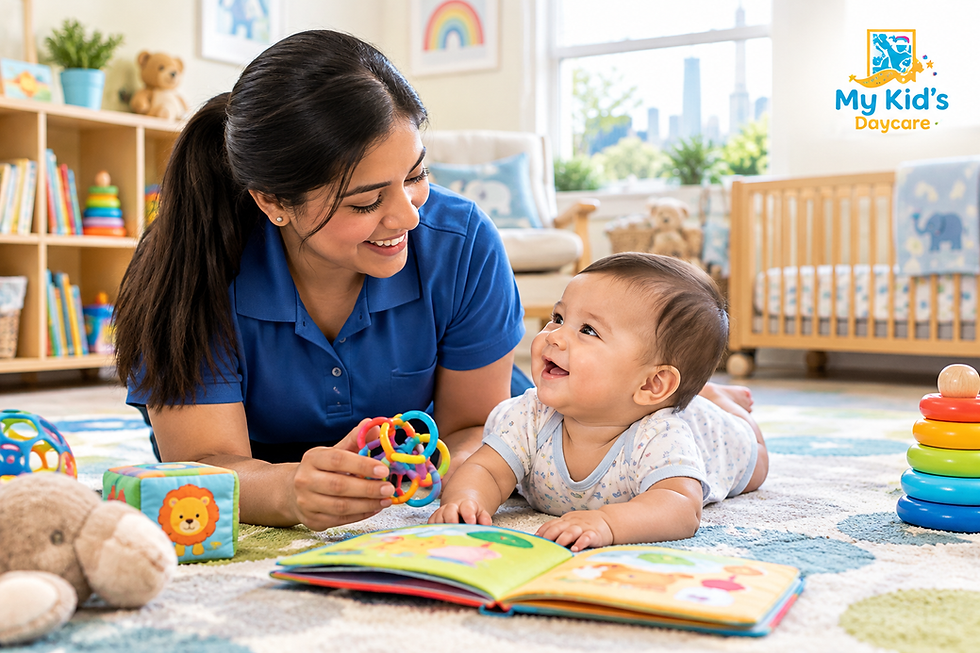
Warmth and connection. The caregivers greet your baby by name, soothe them when needed, respond to cries and smiles, and recognize each infant’s unique rhythm. A space where you feel your child is genuinely seen, not just supervised.
Respect for individual pace. Every infant develops differently rolling over, babbling, and first sit-ups in their own time. The center should appreciate that and adapt.
At My Kid’s Daycare, the infant room is “exclusively designed with the safety and security of the little ones in mind,” and a “developmental and age-appropriate curriculum” is noted.
Communication with parents. Regular updates about how your baby is doing eating, sleeping, any emotional moments help you stay connected and reassured.
Partnership with families. A daycare that invites you in, values your input, and honors the home routines you have is stronger.
Environment of growth. For infants, growth is fastest in those early months: physical, social, emotional, and cognitive. The best places offer gentle stimulation: safe sensory areas, music, movement, story time, and opportunities for little discoveries.
My Kid’s Daycare lists elements like “Music & Movement, Role Play” in their description of a day.
So in short: the best daycare for infants is one where love and care are as foundational as Safety and professionalism.
How do I evaluate “best daycare near me for infants”?
When you type in “best daycare near me for infants” and start visiting options, here are some steps to help you evaluate.

a. Visit the facility (in person if you can). Observe how the infant room looks: is it clean, well-lit, calm rather than chaotic? Do caregivers seem engaged and attentive? Are there age-appropriate toys and space for baby movements?
b. Ask about ratios and staffing. Lower infant-caregiver ratios mean more personalized attention. How specially trained are the caregivers in infant care? And how consistent are they (do babies get to see the same loving faces every day)?
c. Review the daily schedule and curriculum. Ask: How are naps handled? How are feedings scheduled? What type of interactions do infants get (cuddles, songs, one-on-one)?
At My Kid’s Daycare, a sample day includes Arrival & Free Play, Breakfast, then Circle Time, Snack Break, Outdoor Play, Exploring Learning Centers, Storytime, Music & Movement, Lunch & Nap, etc.
While some of this schedule may apply more to older children, the fact they have a set day and structure gives you a sense they think about development.
d. Safety, health, and cleanliness. Infant rooms should be sanitized, safe from hazards, with secure entry for families, cameras (if used), or transparent windows so you can see in. The center must follow hygiene and health regulations.
For example, My Kid’s Daycare is a licensed child care center per local listings.
e. Communication with you. Ask: How will I receive updates? Photos? App messages? Are there parent-teacher (or parent-caregiver) meetings? How will they share developmental milestones?
f. Family feel and culture. Talk to staff, observe how they interact with babies and families. Does the center value diversity, inclusivity, and family partnership?
My Kid’s Daycare states they value “Empathy and courtesy, Diversity and inclusivity, Partnerships with our families and communities.”
g. Accessibility and logistics. Since you’ll likely be driving or commuting, check the daycare’s hours, drop-off & pick-up time, proximity to your home or work, and extra services like flexible scheduling.
My Kid’s Daycare lists hours 6:00 AM to 7:00 PM Monday-Friday.
By doing your homework and visiting with your infant in mind, you’ll better discover the best daycare near me for infants that fits your Family’s needs.
What emotional benefits does a quality daycare provide for your infant?
The emotional benefits are truly incredible not just for the baby, but for you as the parent.

For the infant:
They develop a sense of security. When caregivers respond consistently to a baby’s needs, feedings, soothing, interactions the baby learns the environment is trustworthy. That builds the foundation of emotionally healthy development.
They experience early social connections. Even for infants, the presence of caring adults (and eventually peers) stimulates their emotional awareness: smiling, cooing, responding. These preview social interaction skills.
They gain confidence in being explored gently. In a well-designed infant program, your baby will have safe opportunities to explore their surroundings, reach for objects, hear music, roll, crawl, and move. This translates into emotional confidence: “I can try, I can explore.”
They feel the warmth of attachment extended beyond the home. While the primary attachment is you, the daycare environment becomes a second secure base. This doesn’t replace you, it complements your role.
For you, the parent:
Peace of mind knowing your baby is in a place where love and care happen. That helps reduce anxiety and allows you to focus on your work or other responsibilities without constant worry.
Better parent-child moments at home. When your baby’s emotional needs are reliably met during the day, the moments you share become more relaxed and responsive rather than both of you being stressed.
Confidence in your parenting choice. Choosing what is truly the best daycare for infants for your Family reinforces your sense of being proactive and thoughtful in your child’s well-being.
When the care environment aligns emotionally and developmentally with your infant’s needs, the result is a little person who feels secure, valued, and ready for growth and a parent who feels supported, connected, and at ease.
"You can’t pour from an empty cup. Knowing your child is safe and loved frees up your mind to be a better parent, a better employee, and a better you. That peace is invaluable."
My Kid's Daycare Houston Team
What should be included in an infant-friendly curriculum?

When you’re exploring options for the best daycare for infants, it helps to know what a strong infant curriculum should look like. It’s less about “learning ABCs” at this age, and more about supporting the emergent capacities of your baby.
Here are key components:
1. Responsive caregiving: The caregivers pay attention to individual infants when they need a feed, a nap, a cuddle, a diaper change and respond promptly. The environment should always be interactive, avoiding long periods where the baby is passively “just watching.”
2. Sensory richness: Infants learn via their senses touch, hearing, sight, and movement. Activities might include soft textures, gentle music, movement (rolling, tummy time), and safe objects to reach for.
At My Kid's Daycare, the infant program is “developmental and age-appropriate… invites exploration and celebrates the important milestones.”
3. Structured yet flexible routines: While infants need flexibility (because they sleep at different times, eat at different times), having predictable routines for main parts of the day (arrival, feed, play, nap) helps the baby feel secure.
4. One-on-one and small-group interactions: Infants benefit from individual attention talking, singing, cuddling and small-group interactions like hearing other babies, having stories read. This supports language and social foundation.
5. Safe movement and motor-development opportunities: From tummy time, sitting up, rolling, crawling, to eventually toddling the environment must support those transitions.
Although My Kid’s Daycare lists “Outdoor/Evening Activities” even in the sample “infant day,” this may be more for the older infants/toddlers.
6. Communication with families about milestones and home routines: A strong curriculum not only engages infants at the center but builds a bridge to the home. Sharing what your baby did, what we expect next, is helpful.
When you ask a center for an infant curriculum, you’ll want to hear that they adapt to each baby’s pace, rather than pushing all babies into the same “preschool track” early. That fosters true infant-friendly growth.
How can you prepare your infant (and yourself) for daycare?
Transitioning to daycare is a step, and preparing both your infant and yourself will make it smoother and more positive.

For your infant:
Visit the center beforehand: Bring your baby to visit the daycare, walk through the infant room, and let them explore (even if passively) for short sessions. This builds familiarity.
Establish consistent home routines: If possible, align your infant’s schedule (nap times, feeding times) with what the center uses. That leads to smoother transitions.
Pack familiar items: A favorite blanket, a small soft toy, or a photo of you can help your baby feel secure. Ask the daycare what items are allowed.
Talk positively about daycare: Even though your baby may not understand full words, the tone of your voice matters. Say, “You’re going to a place where they’ll care for you, play with you, and help you grow.” Your calm, confident energy helps.
Ease into it: Start with shorter days and gradually increase so your baby can adjust.
For yourself (as the parent):
Ask all your questions: Don’t hesitate to ask about daily routines, caregiver qualifications, how they handle crying babies, and how they report to you. Knowing these answers reduces anxiety.
Stay connected: Ask if the center uses an app, photo updates, or regular reports. That connection helps your peace of mind.
Plan your drop-off ritual: Make it a quick kiss, a big hug, and a loving, upbeat goodbye. Avoid sneaking away when your baby is distressed; a calm, consistent goodbye helps your baby trust that you will always return.
Expect some adjustment: Both you and your baby may have a transition period. It’s okay to give yourself grace and give the center a chance to know your baby’s needs.
Remain involved at home: Ask for feedback, talk to caregivers, share home information, and continue your own bonding time outside daycare.
By preparing both sides baby and parent you create a more supportive, calm start to what will hopefully be a wonderful growth journey.
Tips for maintaining Communication and monitoring growth while your infant is at daycare
Even when your baby is in very capable hands, maintaining good communication and staying engaged helps you monitor progress and feel connected.

Here are some helpful tips:
Daily reports: Ask if the center provides a daily summary: feeding times, nap times, diaper changes, mood, and what new things your infant did.
Many good centers include this in their infant programs (and My Kid’s Daycare lists “Arrival and Free Play, Lunch & Nap” in their daily outline).
Photos or app updates: If available, receiving brief photo updates or app notifications helps reassure you and gives you snapshots of your baby’s day.
Regular check-ins with caregivers: Set a time (weekly or bi-weekly) to talk with the infant room lead: how is your baby adjusting? Are there any concerns? Is your baby hitting some developmental milestones?
Monitor developmental markers at home: While each baby develops uniquely, you can watch for basic things like smiles, rolling over, reaching, cooing, and interaction. If the daycare has a curriculum, ask how your baby is progressing.
Stay alert to emotional well-being: If your baby seems more upset than usual at drop-off or pick-up, or seems unusually withdrawn or fussier, talk to the center immediately. Sometimes, small changes (new therapist, new room layout, different caregiver) may affect them.
Engage in the partnership: Share home observations with the caregiver: has your baby started a new behavior? Are naps at home different this week? This helps align home and daycare experiences.
Visit occasionally: If allowed, drop in for a short visit (many centers permit parent access) to observe how your baby interacts, how caregivers respond, and how the environment feels.
Evaluate periodically: After a month or two, reflect: Is your baby happy, eating, sleeping, growing? Are you comfortable with how the daycare handles transitions and challenges? If yes, you’re likely in good shape. If not, it may be time to ask for changes or consider alternatives.
By maintaining these lines of Communication and staying attuned, you keep the bond strong, support your infant’s growth, and remain confident in your decision to choose the best daycare for infants.
Conclusion:
Choosing the best daycare for infants is one of the most loving decisions you’ll make as a parent, affording your baby a safe space to grow, explore, and feel nurtured while you engage in your daily responsibilities.
By focusing on both the practical and emotional elements, safe routines, responsive caregivers, warm environments you build a foundation for your infant’s healthy development and your own peace of mind.
Stay curious, ask questions, and keep that parent-caregiver partnership at the heart of your journey. Your baby deserves nothing less than love, care, and growth.
FAQs About Best Daycare for Infants:
At what age can infants start at a daycare?
Many infant programs accept babies as young as 6 weeks (such as at My Kid’s Daycare).
How many infants per caregiver is ideal?
Lower ratios are best. While regulations vary by location, a typical ideal ratio might be 1 caregiver for every 4 infants, but check your local standards.
Will my baby still bond with me if they go to daycare?
Absolutely. Daycare complements your bond, it provides additional safe relationships, and children can form secure attachments both at home and in a loving daycare setting.
How soon will I see growth and development?
Infants grow quickly. Within weeks, you’ll likely see new milestones: rolling, sitting up, babbling, responding to music or movement. The right environment supports that.
What if my baby resists daycare?
It’s common for babies to adjust slowly. Try gradual drop-offs, share familiar items from home, speak positively about the daycare, and give it a little time for your infant (and you) to settle in.
Our Other Daycare Centers In Houston:


Comments